
"Ethiopia coffee history"
3000 article(s) found

The Evolution of drinking patterns of Fine Coffee in History
Ethiopia used to eat coffee as food. Ethiopia used to eat coffee as food. After chopping up the fruit, knead it into balls with oil. This practice spread to Arapai, where coffee seeds were chopped and boiled and spices were added to give birth to Sudanese coffee, the earliest method of coffee making in history. Turkish coffee brews coffee with an utensil similar to a spoon.

History of Sidamo Sakui Coffee the story of Sakura Coffee Popularization of Bean knowledge
Professional coffee knowledge exchange more coffee bean information please follow Coffee Workshop (Wechat official account cafe_style) Sakui Coffee country: Africa Africa, Ethiopia Ethiopia, Coffee Manor: Guji Guji, Hambella Wamena area, Dimtu City, buku able Manor Coffee Variety: Heirloom, Ethiopian Native seed production altitude: 2250-235

A brief introduction to the History and Culture of the Origin and Development of Fine Coffee beans in Ethiopia
Ethiopia (Ethiopia) is one of the major producers of Arab coffee beans in Africa, producing the best Arab mocha beans in the world. It is said that coffee beans were first discovered by shepherds in the Kafa region of Ethiopia, and the name of coffee evolved from Kafa, so Ethiopia is still the hometown of coffee. Production and processing of coffee beans in Ethiopia

History of Origin and Development of imported Micro-batch Fine Coffee beans in Ethiopia washing Sidamo G1 Honey language
The Oromia region is one of the sources of coffee in the world, and its native Oromo is the first person in the world to use coffee as a food, dating back to the 5th century AD. Oromia is located at about 3-15 degrees north latitude and 33-40 degrees longitude. The region is famous for its primordial plant species and species diversity. This is where coffee was born. Yes

The history, culture, stories and allusions of Banci Magi Coffee
For the exchange of professional baristas, please follow the history, culture, stories and allusions of the coffee workshop (Wechat official account cafe_style) Banchi Magi Coffee single Bean. There are mainly eight major producing areas of Ethiopian coffee: Ekempti, Limu, Illubabor, Djimma, Harrar, Teppi/Bebeka, Sidamo, Yirgacheffe. Ethiopian coffee is highly rated in Taiwan.

Citrus aroma of sidamo charkiso fine coffee beans origin development history and culture introduction
Flavor: Medium sweet and sour with a vibrant sun-dried berry aroma, citrus aromas, slightly fermented fruit aromas, fruity aromas. Palate: Comfortable and interesting fruit acids with good sweetness and low thickness. Roast: Medium-roasted Sidamo coffee has a wide variety of flavors. Different soil types, microclimates and countless native coffee species, high mountains, highlands, plateaus, valleys and peace
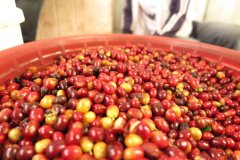
Introduction to the Origin and Development History of Guji Abel Leaf small Farmer Coffee in Guji producing area of Ethiopia
For the exchange of professional baristas, please follow the coffee workshop (Wechat official account cafe_style). As Yega Xuefei became famous, it gradually became an independent producing area. Guji was independent into a new production area by the Ethiopian Commodity Exchange (ECX) in 2010. The Guji producing area, located in the southeast of Yegashefi, is adjacent to Sidamo and Gideo, which has towering mountains.

Yemeni Coffee History: the first country to mass-produce coffee as a crop
Professional coffee knowledge exchange more coffee bean information Please follow the coffee workshop (official Wechat account cafe_style) although the wave of boutique is the revival of technology replacing machinery, but the dominant supply and demand is still inseparable from the market

A brief introduction to the History and Culture of the Origin and Development of Coffee in the aromatic Coffee producing area of Xida Mochizo, Ethiopia
The coffee in Sidamo has a variety of flavors. Different soil types, microclimates and countless native coffee species, towering mountains, highlands, plateaus, valleys and plains, diverse topography, and the geology of the area belongs to nutrient-rich, well-drained volcanic soil. the depth of the soil is nearly two meters, and the surface soil is dark brown or brown. The biggest advantage of the place is
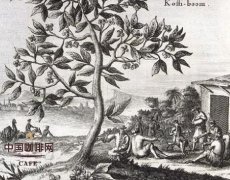
The earliest coffee drink in history the history of coffee along the way
Ethiopia used to chop up coffee fruits and use oil to crush them into balls and eat them as food. This practice spread to Arabia, where coffee seeds were chopped and boiled and spiced to become Cafe ala Sultana, the earliest coffee drink in history. Turkish coffee is brewed with an utensil similar to a spoon (Ibrik), a traditional method that allows deep-roasted coffee.

What is the history and culture of the characteristic name of mocha coffee?
Ethiopia, known as the birthplace of coffee, has a history of coffee origin and a traditional agricultural country. It is most famous for its mocha-Mocha coffee. In the West, Mocha is not only the name of the coffee variety, but also refers to the method of brewing coffee or the utensils for brewing coffee and special conditioning methods. Mocha coffee beans are mostly dried, but there are also so-called poles.

The history, culture and story allusions of the holy boutique beans in the Yega Ficochel area
For the exchange of professional baristas, please pay attention to the history, culture, stories and allusions of the holy boutique beans in the coffee workshop (Wechat official account cafe_style). The most famous producing area in southern Ethiopia is the highest elevation Yegashev district, where more than 90% of the coffee is grown by local small farmers.
Coffee Culture History Coffee Origin and History
It is said that in the sixth century, a shepherd in Ethiopia found his sheep jumping everywhere. He observed carefully that the sheep had this excited reaction after eating only one kind of red tiredness. He tried to share the fruit among others, and all the people felt refreshed and refreshed after eating it, so the fruit was used as a pick-me-up.

Introduction, taste, history and origin of Rosa Coffee
The species of Geisha was discovered in the Rose Summer Forest of Ethiopia in 1931 and sent to the Coffee Institute in Kenya; it was introduced to Uganda and Tanzania in 1936, in Costa Rica in 1953, and Panama was introduced in the 1970s by Francesca of Dongba Seven Farm Garden. Mr. Serraxin got the seeds from CATIE in Costa Rica and started growing Rosa Coffee because

Sidamo Coffee single Bean Flavor description Variety planting Development History production area treatment method
Professional baristas please follow the coffee workshop (Wechat official account cafe_style) Ethiopia is the hometown of Arabica coffee, it is in the forests of the Kaffa region that you can see wild Arabica coffee. In Ethiopian, coffee is called Bun or Buna, and coffee beans (coffeebean) may be translated from Kaffa Bun. Ha

Ethiopia Sun Yega Xuefei arichaG1 imported boutique coffee beans origin, development, history and culture
This batch is produced at the Kebel Aricha processing plant, where there are about 650,700 small coffee farmers who send ripe coffee berries here for processing in exchange for cash. After the treatment plant selects the available berries, they are directly exposed to the sun on the scaffolding and are turned every 2-3 hours in the first few days to prevent overfermentation. After four to six weeks of sun exposure, the workers will look at the sky

A brief introduction to the origin, development, history and culture of Sidamo Guji boutique coffee beans in Dharma, Essex.
Coffee producing country: Africa Africa, Ethiopia Ethiopia, Coffee Manor: Guji Guji, Hambella Wamena region, Dimtu City, buku able Manor Coffee Variety: Heirloom, Ethiopian Native seed production altitude: 2250-2350m quality Grade: G1 treatment: Natural tanning (African drying bed) Factory name: coffee Factory site: Guangzhou Yue

A brief introduction to the History and Culture of the Origin and Development of Fine Coffee beans in the Wild Shaquiso producing area
The coffee producing areas of Ethiopia are Sidamo, Harald and Sidamo, Harrar and Yirgacheffe. Sidamo and Harrar are provinces and divisions. Sidamo is located in the south of Ethiopia bordering Kenya, and Harrar borders Somalia in the east of Ethiopia. Although Yirgacheffe is a community in the Sidamo region, due to soil composition and water content and other reasons.

A brief introduction to the Origin, Development, History and Culture of Sidamo Shakiso Fine Coffee beans
Shakisso/Shakiso, located in the Guji producing area of Sidamo, is one of the micro-producing areas with regional characteristics in the Sidamo producing area. The coffee in this region is quite unique, and the coffee produced has often attracted the attention of the market. The original meaning of Ninety Plus's legendary bean (nekisse) comes from Nectar from shakisso, its producing area.

A brief introduction to the Origin, Development, History and Culture of Sidamo Shakiso Fine Coffee beans
Ethiopian coffee beans grow in close to the natural environment, after years of planting under the same growth conditions, Ethiopian coffee beans have gradually adapted to the environment here. More than 60% of coffee beans are grown in forests or semi-forests. Large-scale coffee-growing villages account for about 35% of the country's total coffee production. Many of these are used.